Kanagawa Orizuru 100 / Pearsall / YLI Silk Thread, 23 dtex 3x2, 200m, 83
ColorsUSD $6.25
Condition : New
Free Shipping

Notify me when the price drops
We will email you if we find a lower price on this product!
Kanagawa Orizuru 100
100% Silk Thread
200 Meters of Thread per Spool
* Denotes Availability in 1300 Meter Spools
Kanagawa's Orizuru 100 - is a 23 dtex 3 x 2 silk thread; which means that three cocoon filament are twisted together and the two strands of the twisted filaments are then twisted together. It is the best way to compare silk thread brands. It is a high quality filament thread manufactured in Japan by Kanagawa Co., Ltd. It is 105 dtex, 95 denier and 95 weight. The 95 wt spools contain 200 meters [ 217 yards ] of silk thread and come in (81) eighty-one different and vibrant colors. Silk threads are the easiest to use due to their higher strength; it's tensile strength is higher than rayon or kevlar thread. It is used for hand piecing, hand and machine embroidery, even on longarms. It is also used for wrapping fly and fishing rods as well as fly tying. Orizuru is equivalent to Tire 100, YLI 100, Kimono Silk 100, and Allure 100 thread.
Shipping and Handling Charges - are set for the purchase of a single spool of thread. Every additional spool is $0.15 additional for shipping and handling. We ship via USPS to anywhere within the United States. After decades, I have settled on a pricing policy for shipping and handling that is fair to me and treats you in a manner in which I would want to be treated.
Colors - we have the largest selection of colors outside of Japan. These swatches were professionally photographed under the same conditions. So while the colors are consistent under the photographic conditions we used; they may appear different on your screen. The most reliable color rendering can be obtained by viewing the largest photographs. Following are color swatches of what we offer.
Available colors for Kanagawa 100 wt / 200 m Silk Thread [ * ] Indicates Availability in 1300 Meter Spools 001 [ * ]
Crimson
Red 002 [ * ]
Brick
Red 017 [ * ]
Yellow
036 [ * ]
Cambridge
Blue 037 [ * ]
Grey
134 [ * ]
Highland
Green 149 [ * ]
Golden
Olive 162 [ * ]
Olive
175 [ * ]
Sherry
Spinner 180 [ * ]
Antique
Gold 196 [ * ]
Primrose
201 [ * ]
Cardinal
Red 202*
Chinese
Red 203*
Liliac
204*
Lavender
205
Pale
Aqua 206*
Bluegreen
207
Electric
Blue 208*
Ocean
209
Royal
Blue 210*
Prussian
Blue 211*
Bubble
Gum 212
Pastel
White 213
Straw
214
Lemon
Yellow 215*
Gold 216*
Hot
Orange 217*
Salmonberry 218
Chartreuse 219*
Mint 220
Basil 221*
Dark
Jungle 222*
Sacramento
223*
Taupe
Brown 224*
Light
Pewter 225*
Anchor
226
Sand
227*
Light
Pewter 228*
Dark
Claret 229
Amber
230*
English
Rose 231
Apricot
232*
Blue
Grey 233
Amethyst
234
Brown
235*
Wood 236
Victoria
Green 237*
Caribbean
238
Dark
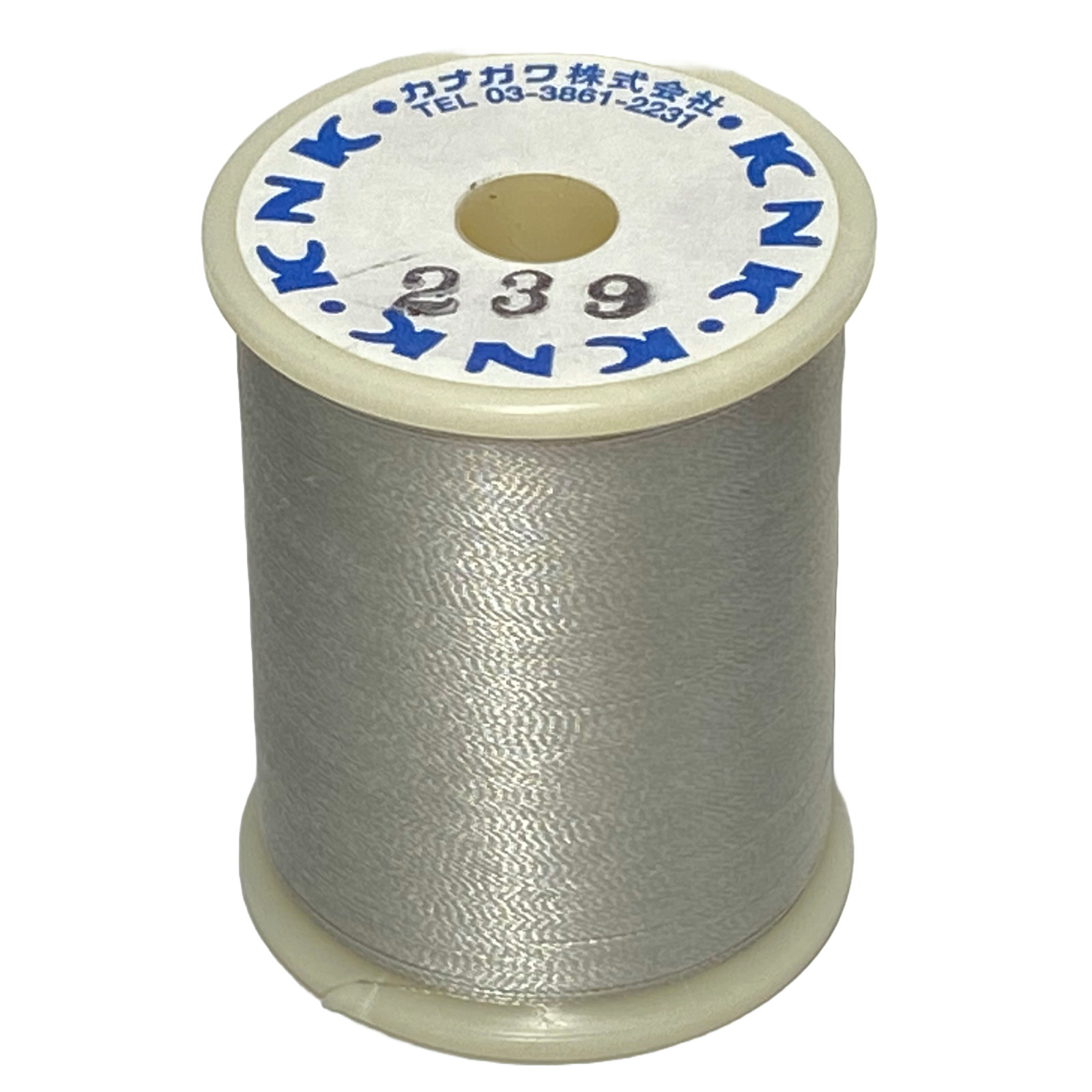
Gray 239*
Neutral 240*
Baby
Pink 241
Light
Olive 242*
Ash
243*
Loganberry
244*
Eggplant
245
Lime
246
Bright
Turquoise 247*
Japanese
Laurel 248
Magenta
249
Dark
Grape 250
Turquoise
251
Phthalo
Green 252
Rose
253
Deep
Eggplant 254
Milk
Chocolate 255
Peacock
Green 256
Turkey
Red 257
Dusty
Rose 259
Bitterroot
260
Sea
Crest 261
Buttercup
262
Pale
Green 263
Tungsten
264
Toad
265
Dusty
Plum Grey 268
Fuchsia
400*
Black
401*
White
405*
Bluish
White 814*
Classic
Chestnut 822*
Maroon 824*
Java
Brown
FAQs
Silk Thread
- How can I tell if one brand of silk is equivalent to another?
- That is a difficult question, given all the labels attached to a silk thread. I suggest you use something I call weave. You can see it expressed for example as 23 dtex 16 x 3, 16 x 3, or even 16. Silkworms have been bred for thousand of years, and a given manufacturer employs a specific species with a specific food source. In the example (23 dtex 16 x 3), the 23 dtex is a reference to the silkworm the manufacture uses; a single silk filament will be 23 dtex.
Then what does the 16 x 3 mean? It means that sixteen individual cocoons or silk filaments have been woven together to form a single strand. And the 3 means that three strands of sixteen silk filaments are woven together to form a thread.
So are all 23 dtex 16 x 3 thread for all producers identical? Well not exactly. Silk has the ability to stretch before it breaks. This stretch is called elongation and is expressed as a percentage. So when the silk producers wind the thread on spools, they apply a tension, thus elongating the thread. And this elongation affects the thread's final dtex, denier, and weight. Although this does not seriously affect property difference between silk producers.
- What thread is suitable for making jewelry or string beads?
- It is known that 100 weight, 50 weight, and 30 weight YLI silk threads and not suitable for this application. However, #8 silk threads can be used for beading applications on material. So it may be suitable for stringing beads or jewelry. If not, you may be able to use it by twisting two or more strands of #8 silk thread together. Until someone tells me, I just do not know the complete answer to this question.
- Can this silk thread be used for fly tying or fly rod eye binding?
- Yes, I have personally used 100 weight Kanagawa silk threads for binding eyes to fishing rods. And my grandchildren have also used it on their rods beginning with their first fishing rod. I used a rod wrapping jig and the 100 weight silk. You just need to take some care with it so as to not snap the thread in the middle of a wrap. Kanagawa 30 weight and 50 weight silks are also used for this application and are stronger. These threads work equally well with bobbins. Do not use the @8 silk thread as it too highly twisted.
- What silk thread is the strongest?
- The short answer from the strongest / thickest to the weakest / thinnest silk threads it is #8 Silk > #30 Silk > #50 Silk > #100 Silk. But to better understand why, it is helpful to understand some thread terminology.
Weight – is a way of indicating the thickness of a thread. The most common weight system specifies the length of the thread in kilometers required to weigh 1 kilogram. Therefore, the higher the weight number, the thinner the thread.
Denier – is a weight specification that states how many grams 9,000 meters of the thread weighs. The greater the denier number, the thicker the thread. The denier weight system also specifies the number of strands of the specified weight which were wrapped together to make the finished thread.
Tex – is the mass in grams of 1,000 meters of thread. If 1,000 meters weighs 25 grams, it is tex 25. The larger the Tex number, the larger the thread.
Tex
Weight
Denier
#8 Silk
105
8
1000
#30 Silk
60
30
567
#50 Silk
27
50
243
#100 Silk
12
100
125
- What size needle do I needle to use with silk thread?
- That, obviously, varies with the size of the silk thread so while I am at it, I may as well provide some additional information on each silk thread.
Machine Needle
Available Colors
Applications
#8 Silk
90 – 100
100
Topstitching, Quilting, Beading Silk Ribbon Embroidery, Cross Stitch and Other Embellishments
#30 Silk
90 – 100
35
Hand Buttonholes, Topstitching, and Quilting; Rod Wrapping and Fly Tying
#50 Silk
80 – 90
88
Construction, Machine Quilting, and Embroidery; Rod Wrapping and Fly Tying
#100 Silk
60 – 70`
67
Machine Quilting, Hand or Machine Appliqué; Rod Wrapping and Fly Tying
- Can I machine wash an application made with silk thread?
- Well you can wash it anyway you want, but I would not recommend it. My wife tells me to hand wash and drip dry or dry clean anything made with silk thread. And I trust and listen to my wife. The internet contains many articles on how to wash silk; so use the online references.


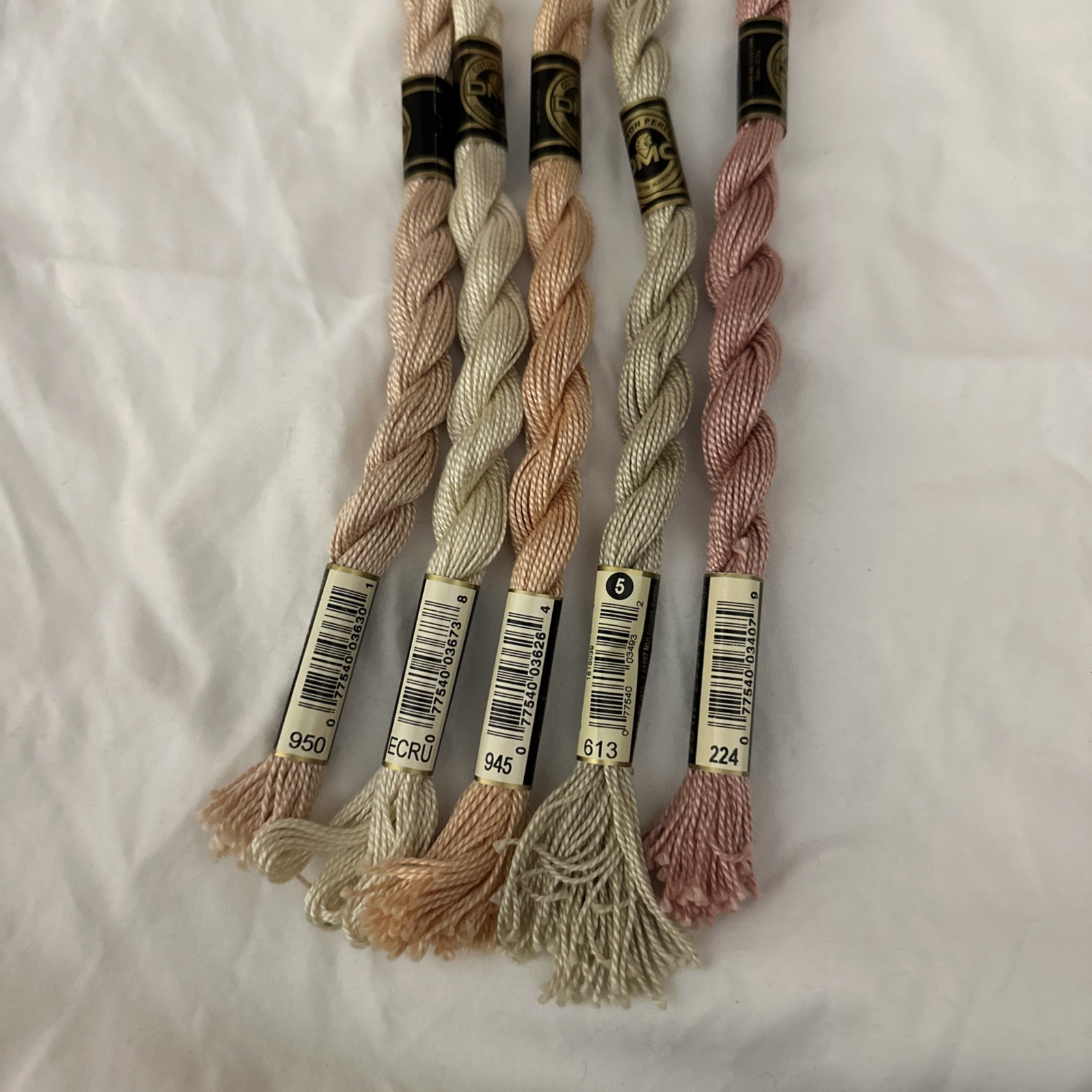
Pearl Cotton Size 12 Thread, Neutral Sampler Pack, Embroidery, Floss, Craft, Set
By Unbranded

$27.71




 .
.
